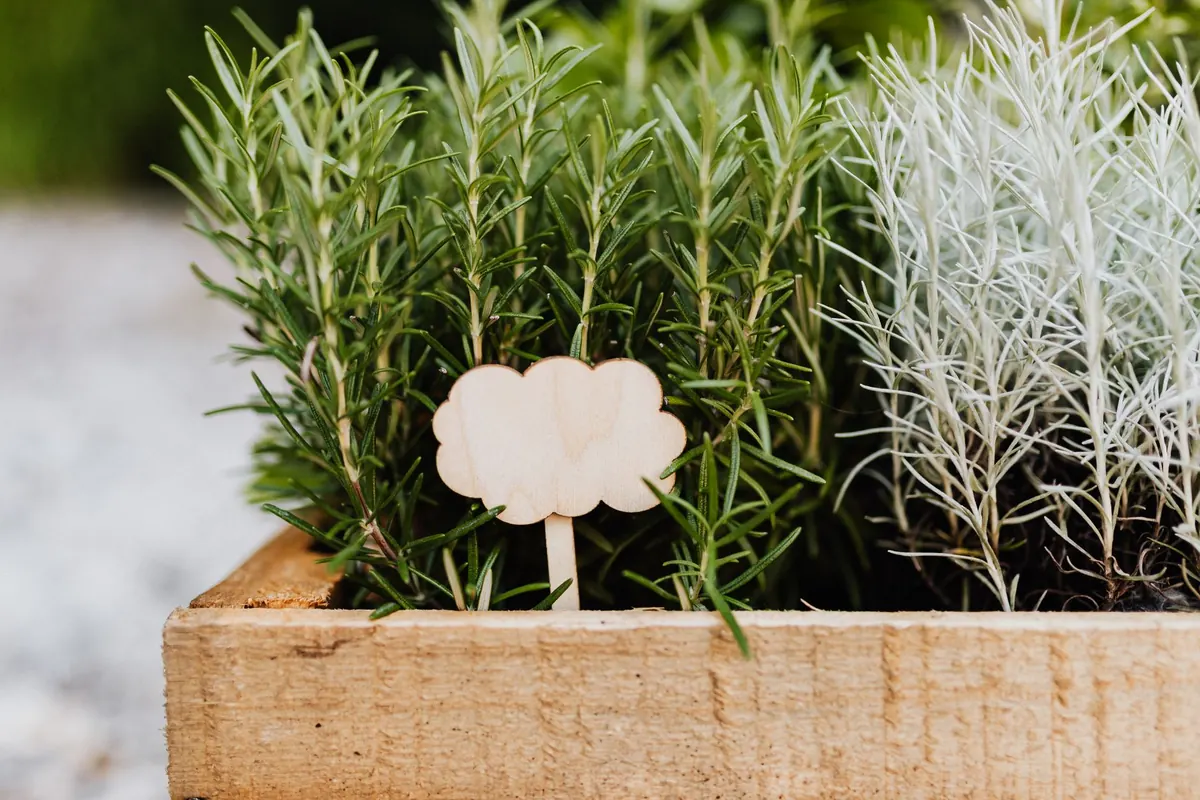
A dry border is not a compromise. Think of it as a small piece of the Mediterranean placed where the hose never quite reaches — the strip along a south-facing wall, the gravel patch by the gate, the sunny bank where the lawn gives up. Lavender, rosemary and sedum belong together because they ask for the same three things: sun for most of the day, air moving freely through their leaves, and water that has drained away by morning. Get those conditions right before the plants go in, and the border settles into a routine of roughly two afternoons of work a year.
Why These Three Work as a Group
They come from the same kind of country — rocky hillsides, thin soil, long dry summers — so they make the same demands and forgive the same mistakes. But they don't do the same job, which is what makes the combination worth planting.
Rosemary gives the border its bones: an evergreen shrub that holds its shape through winter and shrugs off wind. Lavender brings the June and July performance, flowers that hum with bees, and a scent you catch from several metres away. Sedum takes over in September, when the lavender is finished and the rosemary is simply green, filling the gap with flat heads of pink that hold their colour into the frost and feed late bees.
One practical caution: sedum is the most forgiving of the three and will tolerate slightly heavier, slightly damper soil than lavender. If part of your border drains less well than the rest, put the sedum there and keep the lavender where the ground is sharpest and the sun longest.
Read the Site Before You Buy a Single Plant
Sunlight first. Lavender and rosemary want six hours of direct sun at minimum, and eight is better. In half shade they survive but stretch, opening in the middle and flowering thinly. Sedum will manage with a little less, though it will flop towards the light.
Then drainage, which matters more than sun. Dig a hole about 30cm deep and wide, fill it with water, and come back in an hour. If it has drained, you are in business. If it is still full, you have two options: raise the whole bed, or plant each lavender and rosemary on its own mound of gritty soil so the roots sit above the water table.
Walk the site after heavy rain, too. A border at the foot of a slope, or beside a downpipe, will hold moisture far longer than the rest of the garden, and that is what kills lavender — not cold, not drought.
Building a Fast-Draining Bed
This is the part people rush and later regret. Half a day of preparation buys you five years of healthy plants.
- Clear thoroughly. Strip the area of grass and weeds, roots and all. Perennial roots left behind will keep surfacing through gravel for years.
- Loosen the subsoil. Fork the bottom of the bed to break any compacted layer, then leave it rough. Don't walk on it while it's wet.
- Deal with clay. On heavy ground, either raise the bed by 20–25cm with a gritty mix, or plant in individual mounds. Fighting clay from above rarely works.
- Mix the soil. Combine roughly one part garden soil with one part coarse horticultural grit or sharp sand — never fine builder's sand, which sets like concrete — and add a spadeful of garden compost per square metre. The compost is there to feed soil life, not to enrich the planting.
- Let it settle. Water the bed in and leave it a week or two before planting, so you can see where water sits.
Two things to leave out of the mix: fertiliser and rich potting compost. Feed makes lavender and rosemary grow soft and fast, and soft growth is short-lived growth. Lean and gritty is the aim.
Choosing Varieties That Earn Their Space
Lavender
For most gardens, the English lavenders are the reliable choice. Lavandula angustifolia 'Hidcote' is compact and deep purple, 'Munstead' slightly looser and earlier. The hybrid lavandins, such as 'Grosso', are larger, flower later, and make better low hedges if you want a long sweep. French lavender (L. stoechas) is the showy one with the little tufts — beautiful, less hardy, and often short-lived, so treat it as a gamble rather than a structure.
Rosemary
Rosemary is now listed botanically as Salvia rosmarinus, and varieties differ mainly in hardiness and habit. 'Arp' is one of the toughest upright forms, good for cold gardens. Prostrate kinds spill beautifully over a wall or down a step. In a very cold spot, plant against a warm wall or keep rosemary in a pot you can move. Small plants establish faster than large ones — a modest plant in September usually overtakes a big specimen planted in June.
Sedum
For the middle and back of the border, look for Hylotelephium spectabile 'Autumn Joy' or the taller, dark-stemmed 'Matrona', both still widely sold as sedums. For the front edge, use low carpeting types such as Sedum spurium 'Schorbuser Blut' or the little gold-flowered Sedum acre. These spread politely over gravel and knit the border together.
Spacing and Planting Pattern
Resist the urge to fill every gap. These plants grow outwards, not upwards, and a crowded border quickly becomes a damp one.
- Lavender: 45–60cm apart, closer only if you are deliberately making a hedge.
- Rosemary: 60–90cm apart, a full metre for the larger upright forms.
- Sedum: 30–45cm apart for the upright kinds; low carpet sedums at 20–30cm.
Arrange in layers: carpet sedums along the front edge, lavender through the middle, rosemary at the back or as a single anchor at one end. Groups of three of the same lavender read far better than a row of mixed singles. Plant the crowns level with the soil — slightly proud on heavy ground — and never bury the stem. Add nothing to the planting hole. Then water each plant properly, a full can, even though these are drought plants: that first soak is what closes the air gaps around the roots.
The First Summer and Every Summer After
Water new plants every seven to ten days through their first summer, giving each one a thorough soak rather than a daily sprinkle. After that first year, water only in a genuine drought — two or three weeks without meaningful rain — and even then, only the lavender.
Mulch with 5–8cm of gravel, keeping it clear of the stems so the crown stays dry and air can reach it. Gravel also stops soil splashing onto the foliage and keeps weeds manageable. Hand-weed rather than hoeing deeply near the rosemary, whose roots run close to the surface. Do not feed. Ever.
Pruning for Shape and Long Life
Lavender should be trimmed immediately after flowering, usually late August: take off the flower stems plus two or three centimetres of leaf. Never cut back into the bare brown wood, because it rarely regrows. In cold areas, leave the old growth on over winter for protection and tidy in April.
Rosemary needs little beyond a light trim after flowering in spring or early summer, to keep it bushy and stop it splaying. Again, avoid cutting hard into old wood.
Sedum is the easiest: leave the seedheads standing all winter, where they look good in frost and feed the birds, then cut the stems to the ground in early spring as the new shoots appear.
A Border That Rewards Restraint
The biggest risk to this planting is kindness. Extra water, rich compost and a sheltered corner will undo it faster than any drought. Spend your effort on the drainage and the spacing, plant in early autumn if you can, and then step back. Expect a slightly bare first year while the plants knit together, a good second summer, and a border that looks better in its fifth year than its first. If a lavender flops open in the middle, don't rush to replace it — cut it back after flowering and see what it does next season. And if this is your first dry border, start with one bed and learn its habits before you dig up the rest of the garden.