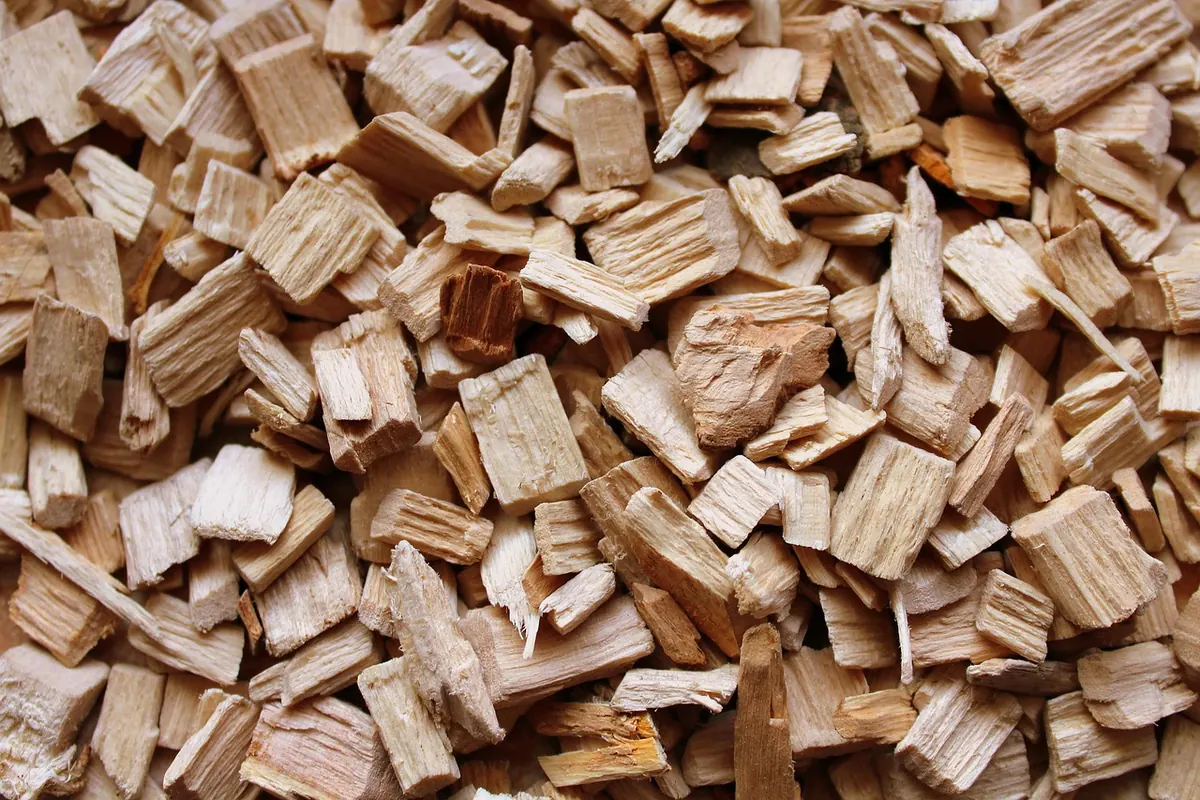
Mulch looks simple from a distance: a layer of something spread over soil. Up close, the choice changes how often you weed, how much you water, what happens to your soil, and how the bed looks in February. Bark, straw, compost, and gravel are four reliable materials, but they are not interchangeable. Each solves a different problem, and each creates a few of its own. The right mulch for a rose border is rarely the right mulch for a squash bed.
Bark Mulch: Structure, Shade, and Slow Decay
Bark is the tidy, structural choice. Shredded bark knits together into a mat that resists wind and looks settled almost immediately; larger nuggets are looser and better suited to informal shrub borders. Aged or partially composted bark is easier to spread and less likely to crust than fresh material. Spread it 5–8 cm deep, and keep it clear of trunks and stems by at least 5–10 cm. Piling bark against a tree trunk keeps moisture where it does not belong.
Weed control is good in established borders, especially against annual weeds. Bark will not solve bindweed or brambles; those need digging before any mulch goes down. Moisture retention is strong because the layer shades the soil and slows evaporation, while rain still passes through. Expect two to four years of useful life, depending on the bark grade and how often you disturb it. Cost sits in the middle range. Best uses are trees, shrubs, roses, perennial borders, and slopes where a light material would blow away. Bark is less convenient in vegetable beds, where you dig and replant often.
Straw: Airy Cover for Vegetables and Soft Fruit
Straw is light, pale, and easy to move in a wheelbarrow. Use seed-free straw rather than hay. Hay contains seed heads and will introduce weeds exactly where you are trying to suppress them. Straw needs a thicker layer than bark, around 8–10 cm, because it is loose and airy.
Weed control is moderate: straw smothers small annual weeds, but perennial weeds push through, and slugs find the damp underside appealing. Moisture retention is good, though straw can blow about in exposed gardens and mat down after heavy rain. Its lifespan is one growing season, sometimes less. Cost is often low, especially if you can buy from a local farm or garden supplier. Best uses are vegetable beds, strawberry patches, potato trenches, and temporary paths between beds. At the end of the season, clear it or dig it in with mature compost; straw is carbon-rich and breaks down slowly. Keep it away from young seedlings until they are tall enough to cope with the shade.
Compost: The Mulch That Feeds the Soil
Compost works as both mulch and soil improver. Use mature compost, spread 3–5 cm deep over damp soil. It is finer than bark or straw, so it does not suppress weeds as strongly. In fact, a fresh layer of compost can act as a seedbed; weed seeds that land on it germinate readily. Apply it after weeding, and avoid stirring the surface afterwards.
Moisture retention is moderate. Compost absorbs water and improves soil structure, but a thin layer dries out faster than a deep bark mulch. Cost is low if you make your own and moderate if you buy it in bags or bulk. Lifespan is one season, because compost is meant to break down and be worked into the soil by worms and weather. Best uses are annual beds, vegetable plots, flower borders, and topdressing a lawn after aeration. Avoid immature compost and fresh manure, which can burn plants or create unpleasant smells. A little compost goes a long way; repeated thick layers can create soft, weed-friendly ground and unbalanced fertility.
Gravel: A Permanent Surface With Rules
Gravel is not a soil improver. It is a surface, and it behaves like one. Weed control depends almost entirely on what lies underneath: a proper woven geotextile or a well-prepared base. Gravel alone lets weeds seed into the gaps, and creeping weeds find their way to the edges. Moisture retention is low; rain passes through, but gravel does not hold water against the soil. It can, however, reduce evaporation from the soil surface and suit plants that hate wet roots.
Lifespan is long, often ten years or more, but the upfront cost is higher than organic mulches once you count the stone, the base, and the edging. Best uses are paths, driveways, gravel gardens, drainage strips, and borders of drought-tolerant plants such as lavender, santolina, and succulents. Do not use gravel in a vegetable bed or anywhere you plan to dig. Limestone gravel can raise soil pH over time, so choose the stone type with your plants in mind. Keep gravel away from lawn edges, where it migrates and dulls mower blades.
Comparing the Four
- Bark: Strong weed control in established borders; good moisture retention; moderate cost; two to four years; best for trees, shrubs, roses, perennial beds, and slopes.
- Straw: Moderate weed control; good but uneven moisture retention; low to moderate cost; one season; best for vegetables, strawberries, potatoes, and temporary paths.
- Compost: Moderate to weak weed control; moderate moisture retention; low cost if homemade, moderate if bought; one season; best for annual beds, vegetables, borders, and lawn topdressing.
- Gravel: Strong weed control only with a proper base; low moisture retention; high upfront cost; long lifespan; best for paths, driveways, gravel gardens, and drought-tolerant plantings.
None of these materials wins every category. The useful question is not “Which mulch is best?” but “What is this bed for, and how often will I touch it?” A permanent shrub border rewards bark. A productive vegetable patch rewards straw or compost. A path or dry garden rewards gravel.
A Practical Closing: Match the Mulch to the Bed
Start with the job the bed has to do. For a shrub border, choose bark. For a vegetable patch, choose straw or compost. For a path or a gravel garden, choose gravel, and plan the base before ordering stone. If you are improving poor soil, choose compost and treat it as a soil feed rather than a permanent cover.
Whatever you use, clear weeds first, water the soil, then spread. Organic mulches go on 5–8 cm deep, compost 3–5 cm, and straw 8–10 cm. Keep material clear of trunks, stems, and plant crowns. Top up existing mulch rather than replacing it every year. Gravel is the exception: it is a construction project as much as a garden task, so get the edges and base right the first time.
Photo: _Alicja_ / Pixabay