A small garden makes every decision visible. Commit a 1.2 by 2.4 metre bed to a courtyard and you have given over a good share of the whole plot to one idea. Get the type wrong and you will feel it every spring, when the soil is either too wet to work or too shallow to hold a summer's worth of roots.
The raised bed versus in-ground question comes up in almost every design conversation I have with gardeners working with side returns, paved courtyards, or a strip of lawn behind a flat. Neither option wins outright. What changes is what you pay for: money at the start, water in July, or bending over in ten years' time. Here is how the trade-offs actually play out.
What You Are Really Choosing Between
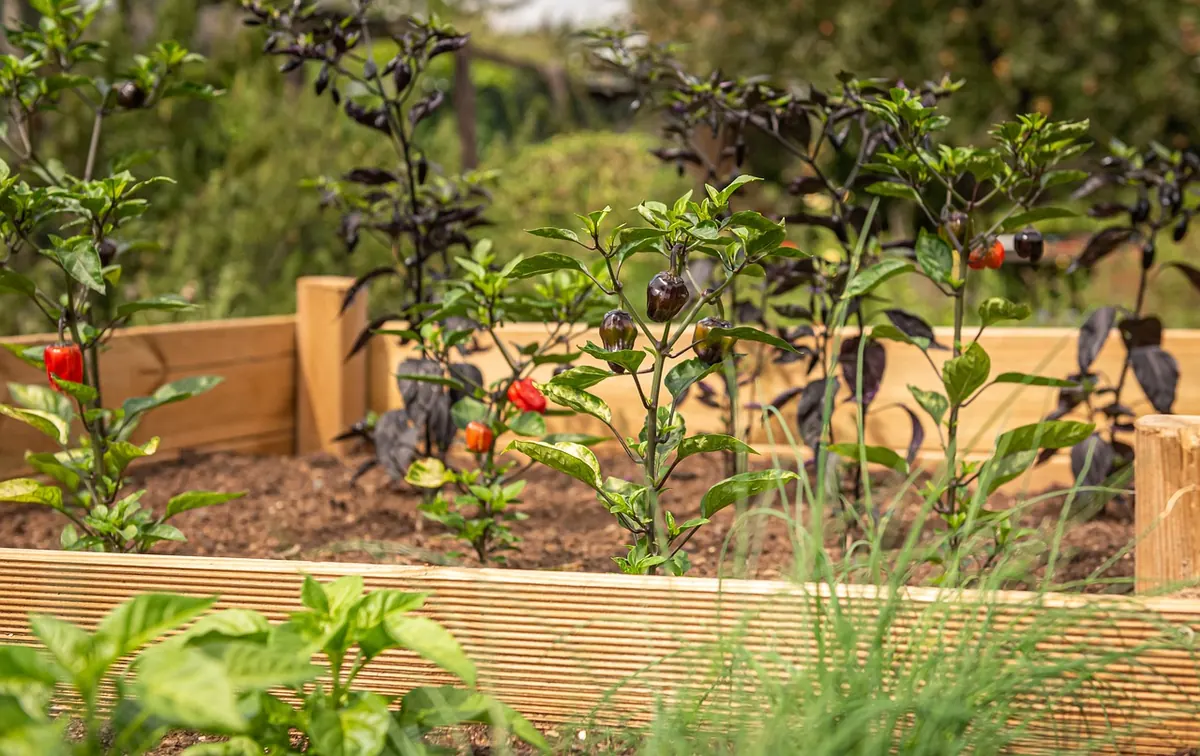
A raised bed is a box of growing medium sitting on top of your ground. An in-ground bed is your existing soil, improved. That is the whole difference, and it explains why the wooden frame gets more attention than it deserves. The frame is not the point. The point is that a raised bed lets you specify the soil from scratch, while an in-ground bed asks you to work with what is already there.
If your ground is reasonable loam — dark, crumbly, with worms in it — an in-ground bed will usually beat a raised bed on cost and on water use, and it will grow just as well. If your ground is compacted builder's subsoil, rubble under a thin skim of turf, or heavy clay that holds water through February, a raised bed solves a problem you cannot dig your way out of in a weekend. Same story if the site is a former industrial plot or sits beside old flaking paint: importing clean soil bypasses the risk entirely. If you suspect contamination, ask your local environmental health service before you plan to grow food there.
Cost: What You Actually Pay For
The timber, the fixings and the liner are the visible expense of a raised bed, but the fill is usually the bigger bill. A bed 1.2 metres by 2.4 metres, filled to 30 centimetres, needs just under a cubic metre of material — roughly seventeen 50-litre bags if you buy compost that way, which is an expensive habit. Bulk delivery of topsoil and compost costs far less per litre, and mixing your own blend of topsoil, compost and a little grit gives you better control than any pre-mixed bag.
In-ground beds cost a fork, a few hours, and a load of compost worked into the top 20 centimetres. Add lime or sulphur only if a soil test says you need it. That is close to the whole budget. The hidden cost of raised beds is the paths: once you build boxes, you need clear, firm routes between them, and in a small garden those paths are land you have chosen not to grow on.
Drainage, Warmth and Watering
Drainage cuts both ways
Raised beds drain fast, and whether that is a blessing or a curse depends entirely on your soil and your summer. On heavy clay in a wet climate, a raised bed is the difference between crops that survive winter and crops that rot. On light, sandy ground in a dry region, the same bed becomes a sieve — water and nutrients pass straight through, and you spend August with a hose in your hand.
Earlier warmth, modest gains
Soil in a raised bed warms sooner in spring because it is exposed to the air on all four sides as well as the top. The effect is real but not dramatic: expect days rather than weeks, and only if the bed is at least 25 to 30 centimetres deep. Shallow beds, the sort sold as kits, warm quickly and dry out just as quickly.
Watering is where the difference shows
Plan on more irrigation in a raised bed, not less. A drip line run along each bed, mulched with straw or compost, saves a great deal of standing about with a can. In-ground beds on clay hold moisture far longer and can go a fortnight without attention in a normal summer. If you garden on a meter or travel in July, weigh that carefully.
Maintenance, Rotation and the Long Game
Wooden frames rot. Board ends sink into damp soil, and the sides that face north stay wet longest. Expect to replace boards sooner than you would like, and choose timber that is durable without chemical treatment if you are growing food — the liner between soil and wood matters less than the wood itself. Soil in a raised bed also settles: top it up by a few centimetres each autumn with compost.
In-ground beds ask less of you structurally, but they inherit every weed root in the neighbourhood. Creeping buttercup and bindweed will walk in from the edges. A raised bed with a solid base of cardboard and compost suppresses a good deal of that in the first year, though nothing short of a membrane will stop bindweed, and a membrane under a bed keeps worms out.
Rotation is where raised beds quietly earn their keep, because four boxes are easy to think about as four blocks: roots, brassicas, legumes, and potatoes or tomatoes in the fourth, moving round each year. In-ground beds rotate just as well if you have the space to draw the plan. If you only have two beds of either type, rotation becomes a compromise anyway — keep the same plant family out of the same spot for at least two seasons, and lean on compost to carry the soil instead.
The best bed is one you can reach the middle of without standing on the soil.
Access and Comfort in a Tight Space
Width matters more than height. A bed you can reach from both sides should be no wider than about 1.2 metres; against a wall or fence, keep it to 60 to 75 centimetres so you can reach the back without treading on the soil. A 30-centimetre-high edge gives you somewhere to sit while you weed, which sounds trivial until you have spent an hour kneeling on gravel.
Taller beds mean less bending, and they are the sensible choice if your back, hips or knees have opinions. Be aware of the price: a bed 60 centimetres high needs twice the fill of one at 30, and it dries out faster because more of the soil is exposed to air. If access is the deciding factor, build fewer, deeper beds rather than many shallow ones.
Where Each One Wins
Choose raised beds when:
- Your ground is thin, compacted, waterlogged or of uncertain quality.
- You want a clean start with soil you chose yourself.
- Bending and kneeling are difficult, and height is the priority.
- The garden is paved or on a roof terrace, where there is no ground to dig at all.
- You want defined edges that keep paths and beds tidy in a small space.
Choose in-ground beds when:
- Your soil is decent and you are willing to feed it with compost each year.
- Water is scarce or expensive, or you are away through the summer.
- The budget is tight and you would rather spend it on plants.
- The plot is large enough that importing soil for the whole area is unrealistic.
- You want the bed to look like part of the garden rather than an addition to it.
A Practical Way to Decide This Weekend
Before you buy anything, do three things on site.
- Test the ground. Dig a spade-depth hole where the bed would go and squeeze a handful of soil. If it ribbons out between your fingers, it is clay. If it crumbles and darkens your palm, it is loam. If it falls apart almost dry, it is sandy.
- Watch the water. Fill the hole with water and look again the next morning. Still full means poor drainage, which argues for a raised bed or a drainage trench. Gone within an hour means very free-draining ground, which argues for in-ground beds and heavy mulching.
- Work out the volume. Length times width times depth gives you the fill you must buy. It is the number that decides most raised-bed budgets, and it is easy to underestimate.
There is also a middle route worth trying, especially in a small garden: keep the soil at ground level and raise the paths instead, using gravel, bark or decking offcuts. You get dry feet, clean edges and better drainage without importing a cubic metre of soil. And if your plan involves retaining walls or a slope, check local rules or take advice from a qualified landscaper before you build. Start with one bed, see how it behaves through a full year, and let the second season tell you whether to build more.
Photo: AndreasGoellner / Pixabay